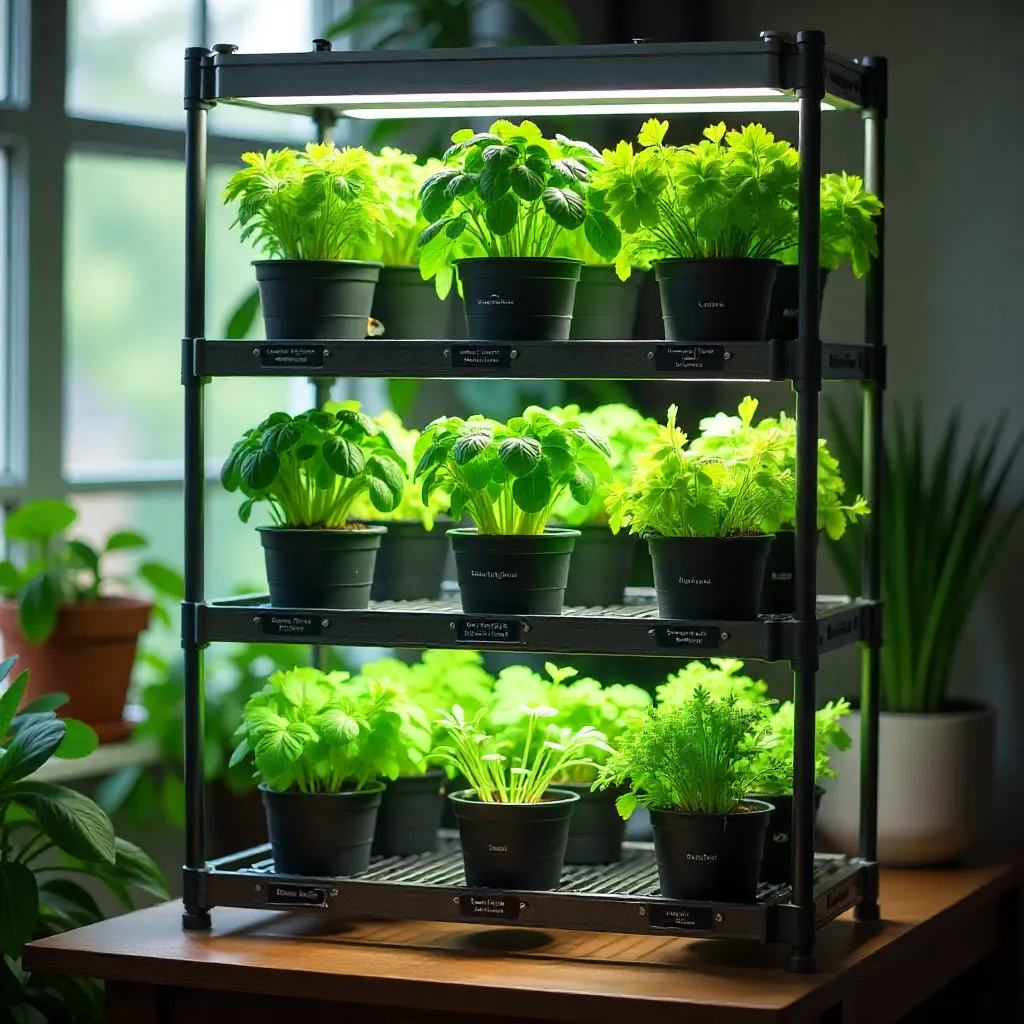
Herb Specifications
Each herb variety has specific requirements for light spectrum, nutrient concentration, and growth cycles. This database provides detailed specifications for optimal cultivation.
| Herb Variety | Optimal Spectrum | PPM Threshold | pH Range | Harvest Cycle |
|---|---|---|---|---|
| Basil | 450-650nm (Blue-Red) | 800-1200 ppm | 5.5-6.5 | 4-6 weeks |
| Mint | 400-700nm (Full Spectrum) | 600-900 ppm | 5.5-6.0 | 6-8 weeks |
| Thyme | 600-700nm (Red Dominant) | 700-1000 ppm | 5.5-7.0 | 8-10 weeks |
| Oregano | 450-650nm (Blue-Red) | 800-1100 ppm | 6.0-7.0 | 6-8 weeks |
| Parsley | 400-700nm (Full Spectrum) | 600-900 ppm | 5.5-6.5 | 8-10 weeks |
| Cilantro | 450-650nm (Blue-Red) | 700-1000 ppm | 6.0-6.5 | 4-6 weeks |
Growing Parameters
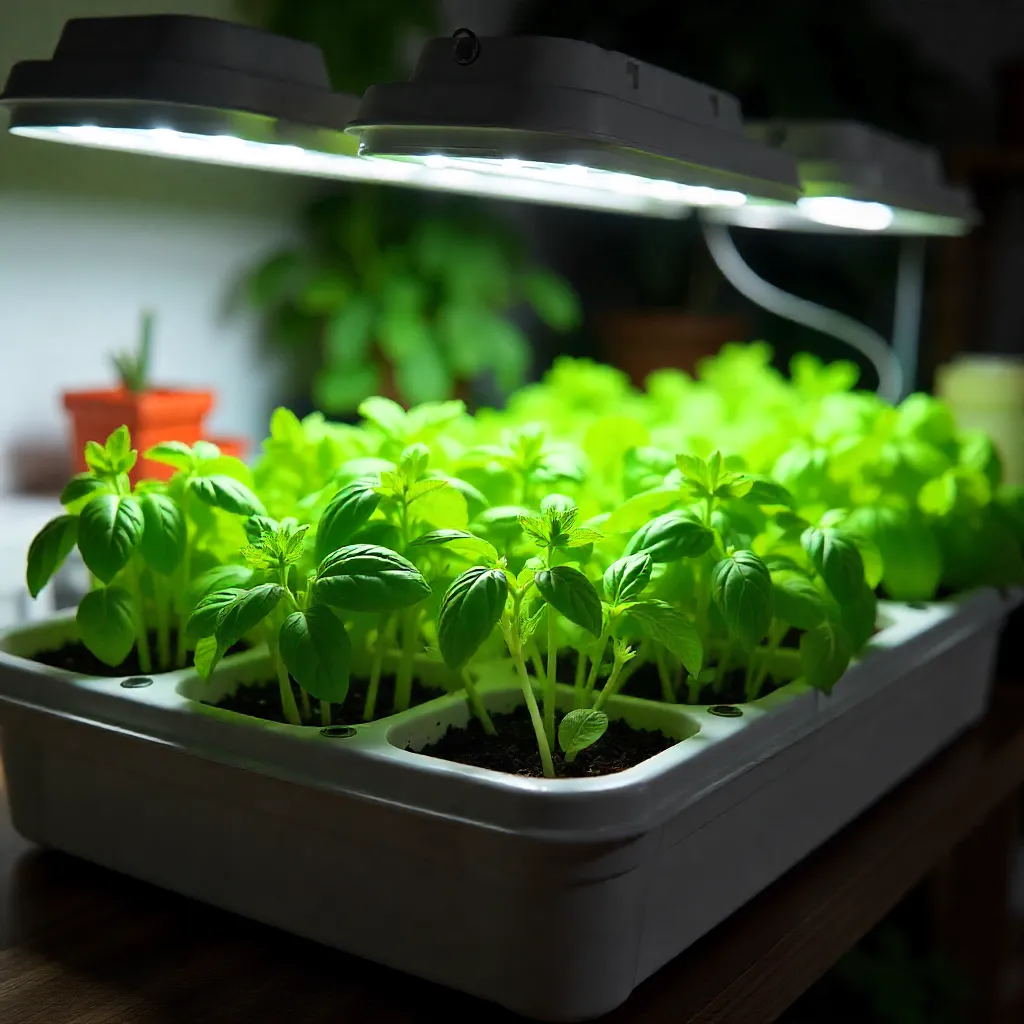
Light Spectrum
Different wavelengths affect plant growth stages. Blue light (400-500nm) promotes vegetative growth, while red light (600-700nm) supports flowering and fruiting. Full-spectrum LEDs provide balanced development.
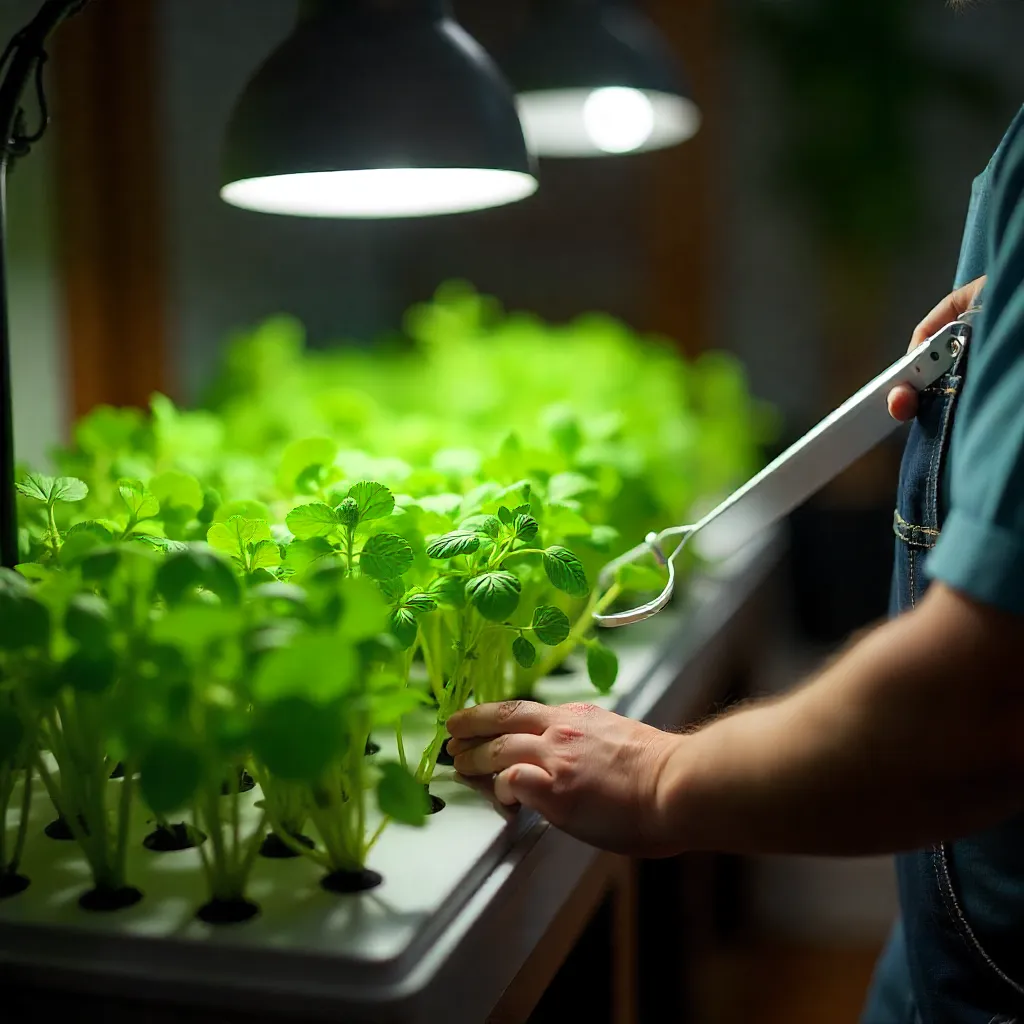
Nutrient Concentration
PPM (parts per million) indicates total dissolved solids in the nutrient solution. Higher concentrations support faster growth but must be balanced to avoid nutrient burn. Monitor EC levels regularly.
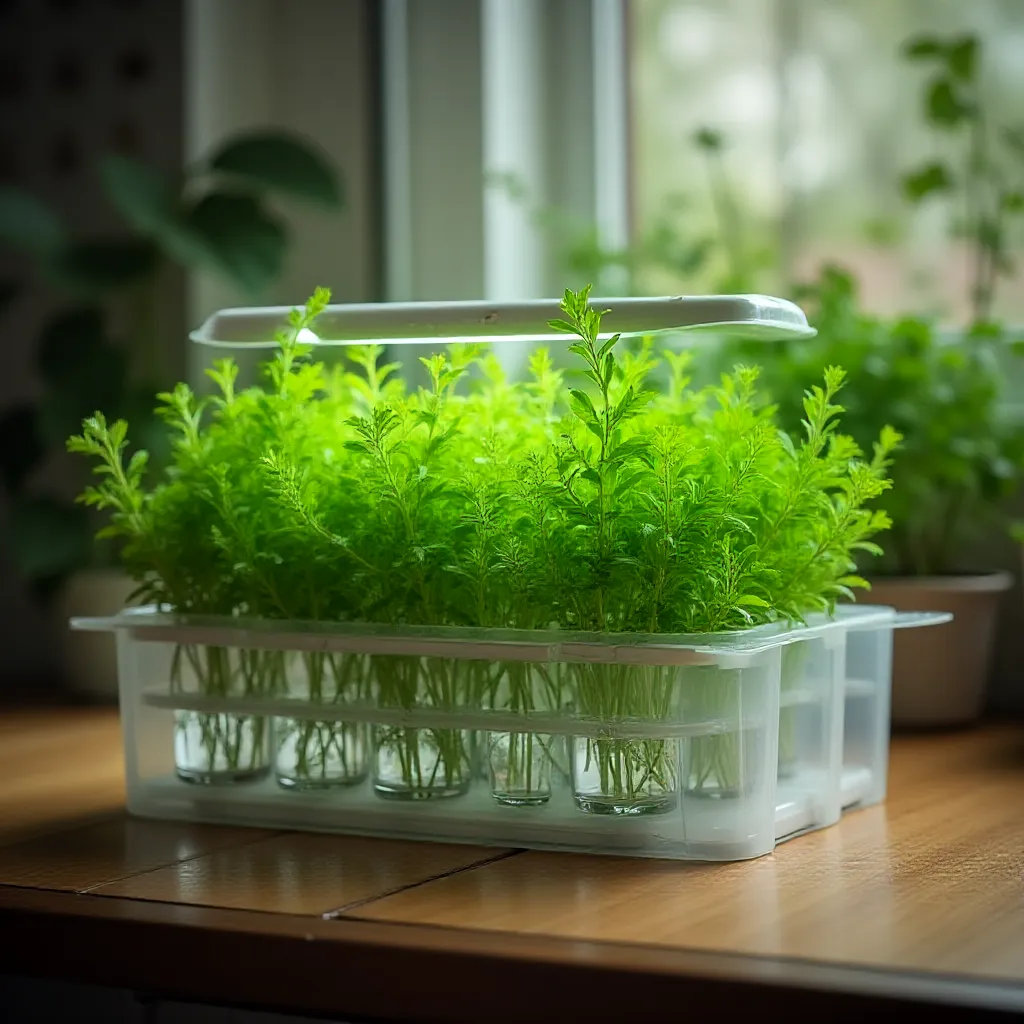
pH Balance
Acidity affects nutrient availability. Most herbs prefer slightly acidic conditions (pH 5.5-6.5). Regular pH monitoring ensures optimal mineral absorption by root systems.
Harvest Timing
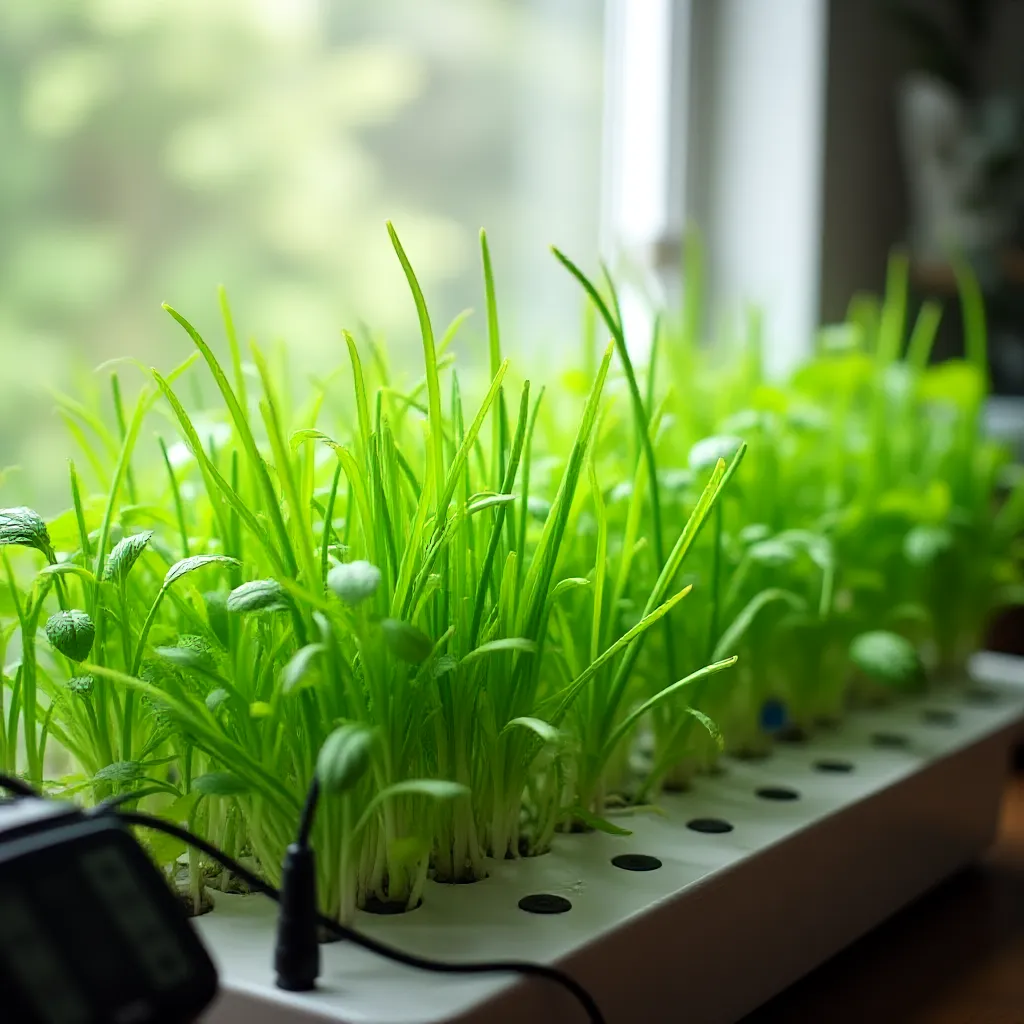
Harvest cycles vary by variety and growing conditions. Begin harvesting when plants reach sufficient size, typically 4-10 weeks after germination. Regular harvesting encourages continued growth.
Cultivation Notes
Temperature Range
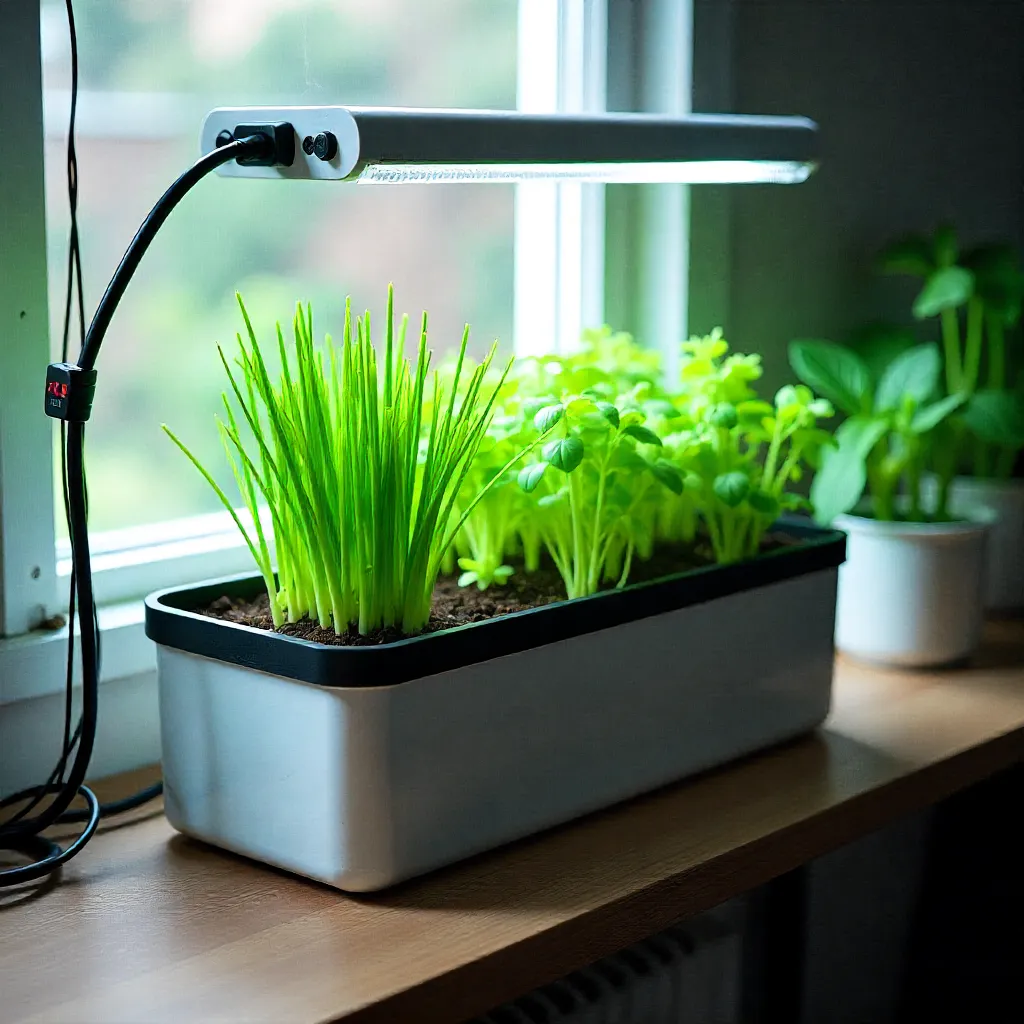
Most herbs thrive at temperatures between 18-24°C (65-75°F). Maintain consistent temperatures to avoid stress that can affect growth rates and flavor development.
Humidity Control
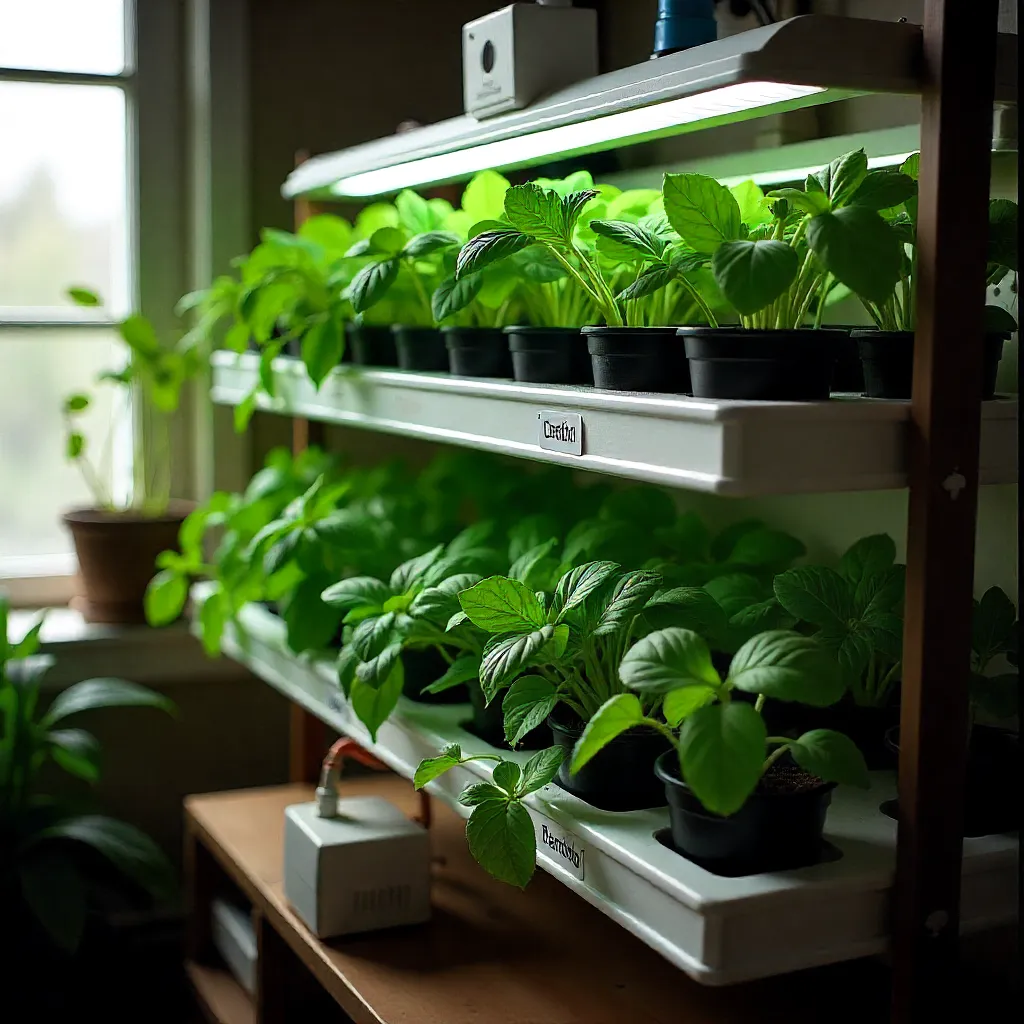
Relative humidity levels of 40-60% are generally optimal. Higher humidity can promote fungal growth, while lower levels may cause leaf desiccation.